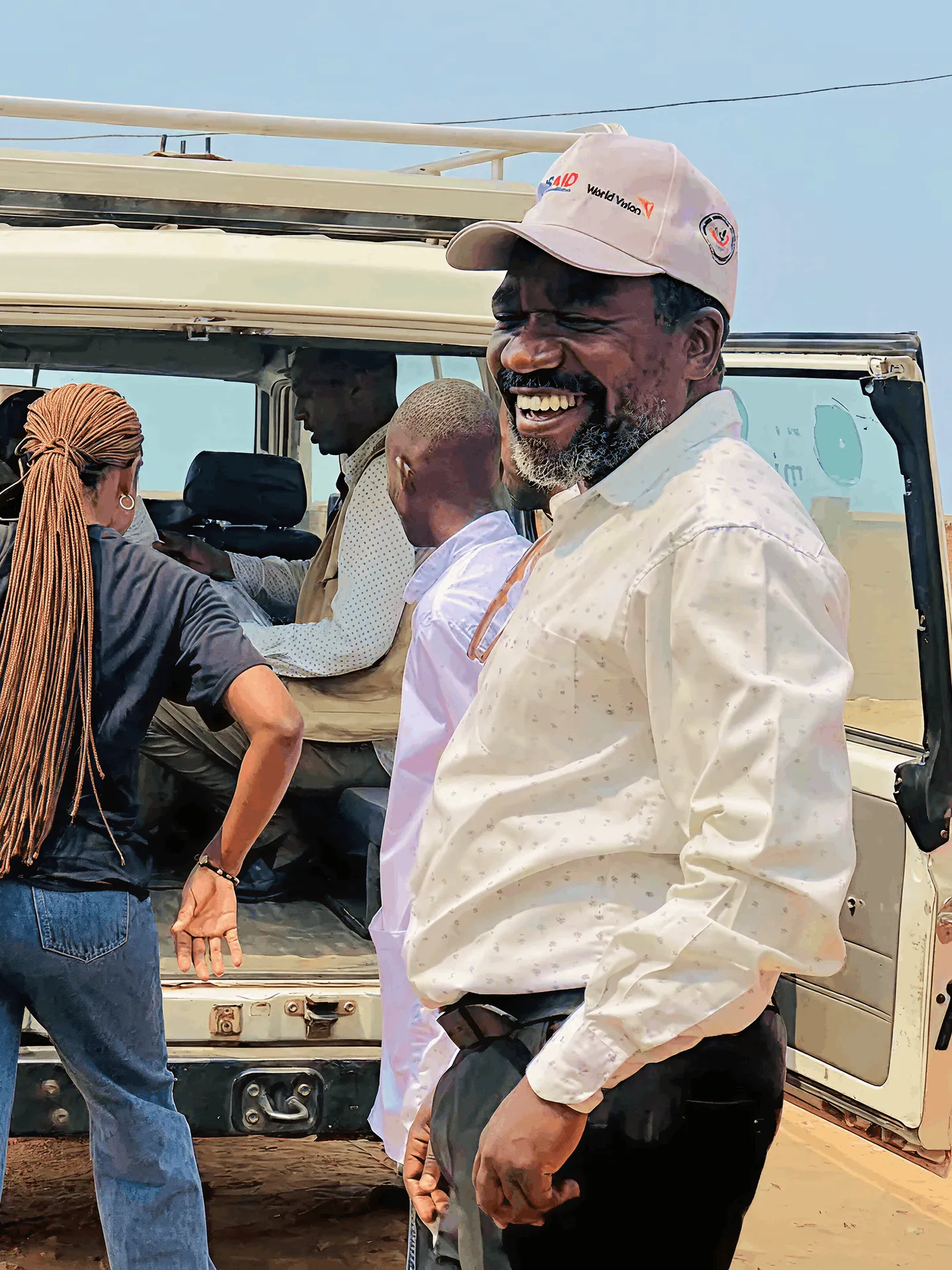
In October 2024, a Dutch colleague, several Congolese colleagues, and I travelled from Uvira to Bukavu. The journey was long, rough, and far from safe. We had to drive as quickly as possible between 10 a.m. and 2 p.m. to minimize the risk of encountering security incidents. Numerous armed groups operate along this route, driven by shifting power dynamics. Just a few months after our journey, the cities of Goma and Bukavu were taken over by M23 rebels.
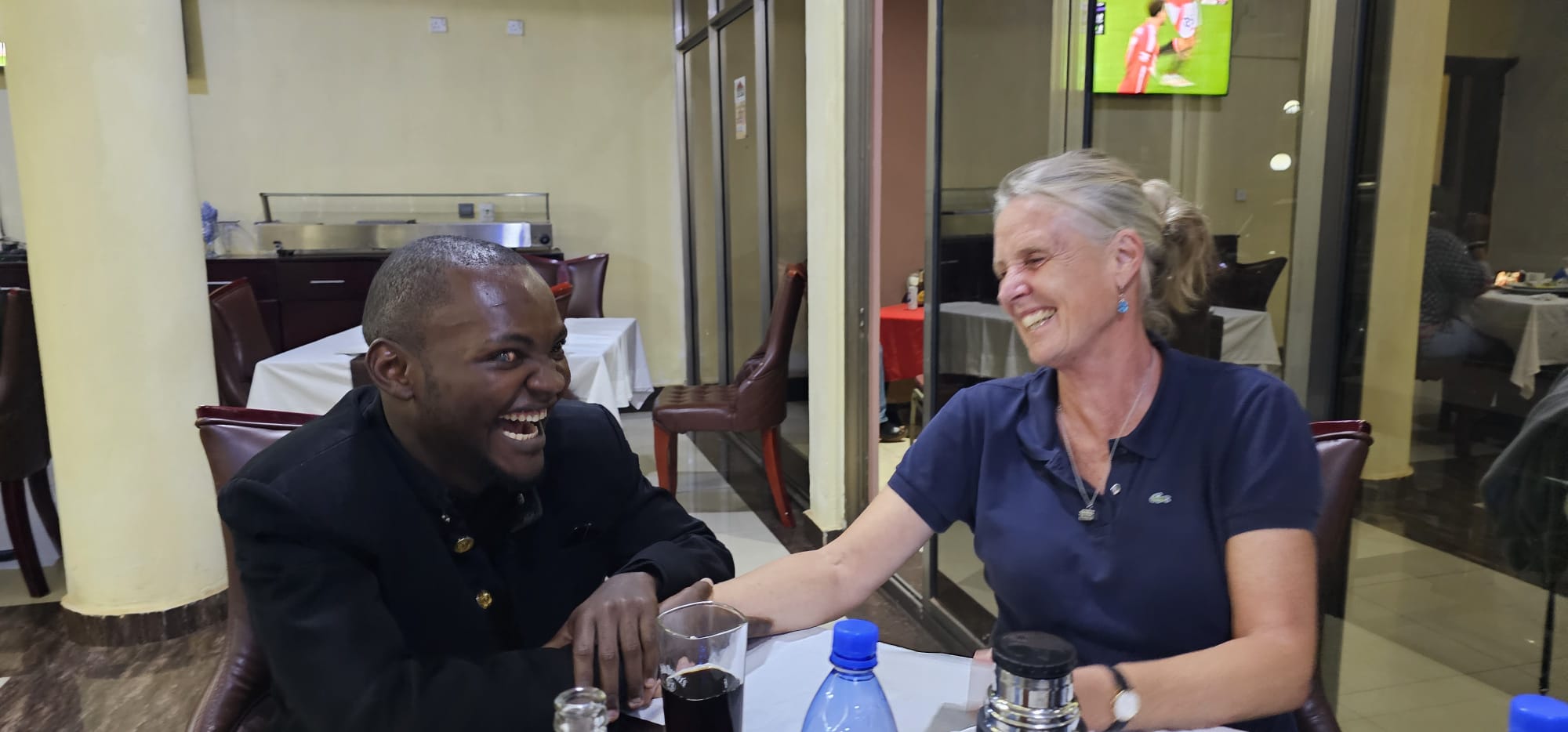
By the time we arrived, we were exhausted. There was no time to rest, however—we had a full afternoon of meetings scheduled at our hotel. After some hours, Damas entered the lobby, accompanied by a friend. The moment we saw each other, we were overwhelmed with joy. We embraced tightly and laughed, unable to stop. It had been more than five years since we first met in Uvira, in June 2019. Back then, Damas was seventeen. He had lost his sight shortly after his fourteenth birthday due to illness.
During that first visiting in 2019, I went to his home. He asked me if I could take him to the Netherlands, where skilled doctors might restore his vision and perhaps even open the door to studying at a Dutch university. I remember looking at him, feeling deeply saddened. He did not yet seem to have accepted his condition. What do you say in response to such a question? Damas has loving parents. “My parents made me the person I am today; without them I would be nowhere,” he told me. I hesitated, then said I believed he was better off staying with his family in Congo—but my words felt inadequate and unconvincing.
Damas was one of the 1,200 children in Uvira supported during the first phase of the Tunafasi program. Gilbert, director of ADED, referred him to an eye specialist in Bujumbura,Burundi. After multiple treatments, Damas and his father received the devastating news that he would never regain his sight. “That was one of the hardest moments of my life,” Damas told me when we met again in Bukavu. “Evenmore so because it was the first time, I ever heard my father cry.” He could not see that I, too, was holding back tears as he shared this memory.
Despite everything, Damas persevered. After successfully completing secondary school, he was determined to study law in Bukavu, the provincial capital of South Kivu, a four-hour journey from Uvira. His parents and the Tunafasi programme shared the cost of his education. Initially, the university refused to admit him, but somehow, Damas managed to convince them.
And now in 2024, look at where he is. He is the second-best student in his class. He told me he had just begun his master’s degree in Public Law, driven by a clear ambition: to defend the rights of people with disabilities in his country. As we spoke, he held my hands, as if to reassure himself that our reunion was real.
At one point, the headmaster of a peace school in Bukavu joined our conversation. Damas asked whether there were any children with disabilities enrolled in his school. The answer was no. The headmaster explained that it would be too much work for the teachers. Calmly and diplomatically, Damas responded that inclusion is not as complicated as it might seem. “You simply need to use more auditory methods,” he said. “Look at me—I am among the best students in my class. I perform better than many non-disabled students. Many of us have learned to compensate for our impairments. Often, we are more sensitive, better listeners, more motivated, more perseverant.” His reasoning was flawless. There is no doubt he will become an excellent lawyer.
Since our first meeting in 2019, Damas is sending me voice messages from time to time. “Hello Betteke, good morning, I hope you are doing well. This is Damas. I believe you are fine. I would like to hear from you—how are you, how is your family, how is your work? I am well, I am praising the Lord. My studies are going well. The security situation is still complicated. Uvira is not safe at the moment. The Burundian border is open again… but everything is okay, we are praising the Lord…”
Every time I receive one of his messages, I feel both happy and proud—happy because of the strong human connection between a young man from the DRC and an older woman from the Netherlands and proud because of the extraordinary progress he continues to make. Sometimes, development begins with something very simple: believing in someone. That belief can ignite hope and trust, creating a pathway toward action. Damas often thanks Gilbert and me for believing in him—but it is he who has done the hard work.
In March 2026, for the first time, I received a written message from him:
“So my thesis topic is entitled: The Protection of Persons with Disabilities in Armed Conflicts: A Study of the International Legal Framework and ItsImplementation in the Democratic Republic of Congo.” I read his message several times, struck by how far he has come—a blind young man thriving in a challenging environment, without access to advanced assistive technologies. He hardly seems to realize the magnitude of his own achievement.
Damas’s journey reflects the very essence of the Tunafasi program: offering people a little push when needed, so they can develop themselves—and, in turn, inspire others to do the same.