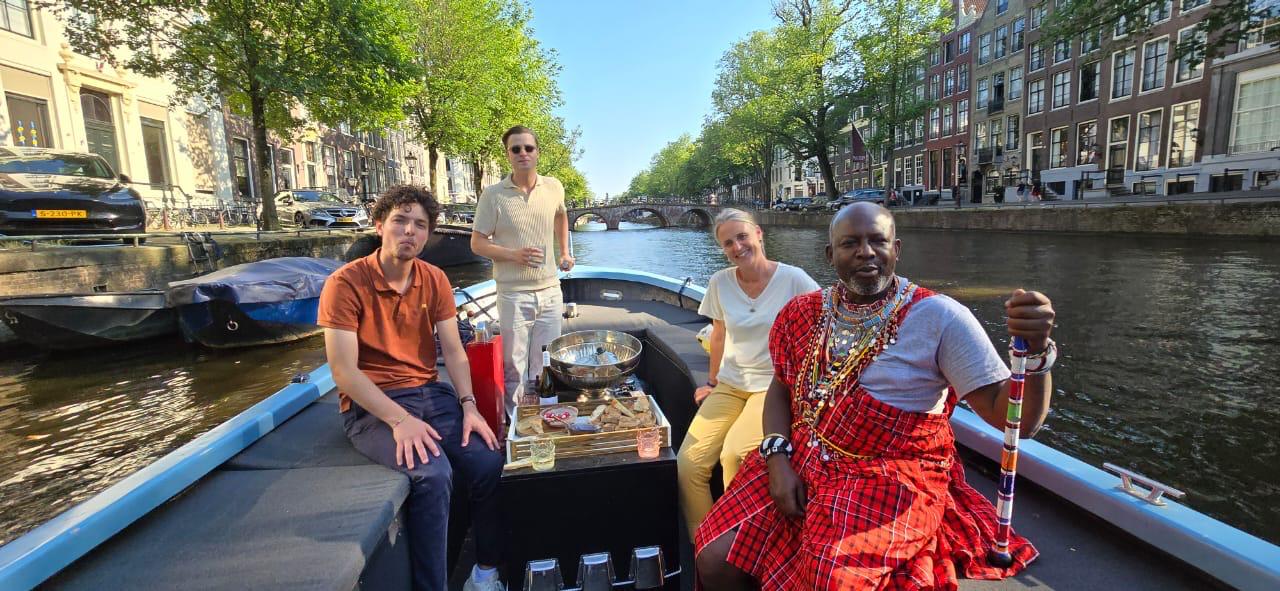
Amsterdam, January 21st, 2026 — Vice Versa published an article that highlights the relationship and partnership between Mali Ole Kaunga, founder of Impact Kenya, and Betteke de Gaay Fortman, founder of TUNAFASI — a collaboration that reflects a broader shift in how development cooperation is being reimagined. Despite coming from different cultural and professional backgrounds, they are united by a strong and shared belief that sustainable change must be driven by communities themselves. Their partnership is built on mutual trust, shared leadership, and a commitment to challenging traditional power dynamics in the development sector.
In the article, both leaders reflect on what it means to move beyond externally designed programmes toward locally rooted solutions. They emphasise the importance of direct and flexible funding for community-led organisations, respecting local and indigenous knowledge, and more equal, transparent partnerships between actors in the Global South and North. Rather than “delivering development,” they advocate for supporting communities to shape their own futures — with external actors playing a supportive, service-oriented role. Their collaboration also highlights the need for development organisations to rethink their own structures, reduce institutional layers, and prioritise impact over organisational self-preservation.
"I see today’s system of development cooperation as a pipeline full of leaks. For me, localization should be a pipeline with no leakage—where funding flows directly from its source to the communities for whom it is intended. Right now, leaks occur at every level. The most frustrating part is that we already know how to fix these leaks. We have the tools and the knowledge to seal them, but the sector is not yet ready to make the changes. Instead of repairing the system, too often we simply replace the water that has leaked out." - Mali Ole Kaunga
For TUNAFASI, this vision is deeply aligned with its mission to strengthen locally led organisations and foster sustainable, community-based systems of change. The partnership described in the article illustrates how new approaches to collaboration can make development more responsive, equitable, and effective — not by doing more, but by working differently.
You can read the full article on the Vice Versa website, click here.